Full-Stack Software Engineering · AI Systems
FinMind AI
Next-Generation AI Financial Assistant & Predictive Analytics Ecosystem
FinMind is an AI-powered personal finance platform designed and developed to automate receipt processing, expense tracking, and financial insights using modern AI services. Built with a modular architecture to support future scaling like multi-currency support, voice logging, and investment tracking.
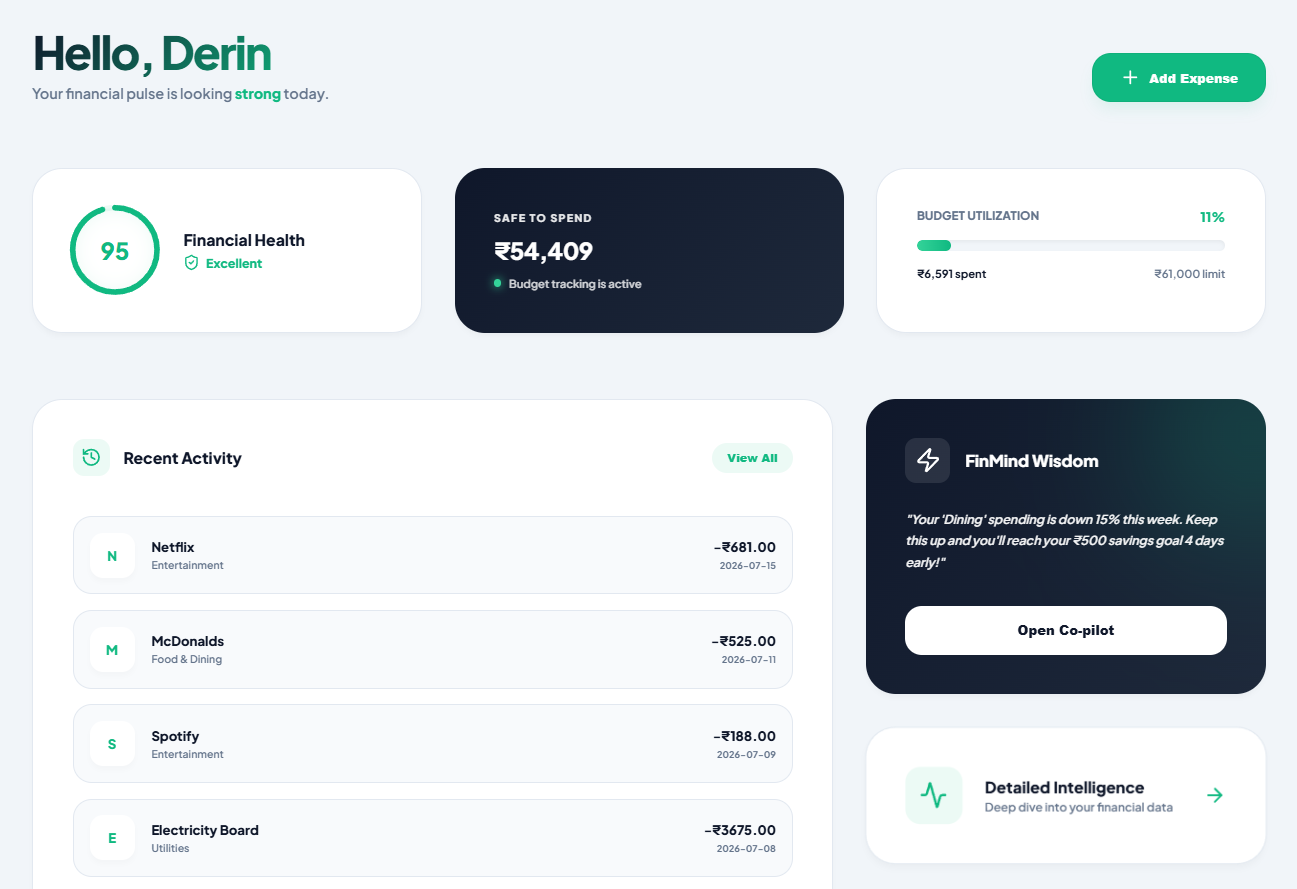
FinMind AI Dashboard – real‑time spending overview, budget tracking, and AI insights
Problem & Solution
Understanding the core value proposition of FinMind.
❌ The Problem
- ✓• Manual expense tracking is time-consuming and error-prone.
- ✓• Traditional personal finance apps lack contextual AI assistance.
- ✓• Users only see historical data, without receiving proactive warnings about overspending.
✅ The Solution
- ✓• AI automatically extracts and structures receipt data in seconds.
- ✓• Users can query their transaction histories using natural language.
- ✓• Time-series models forecast month-end spent values to help users avoid overspending.
My Role — Full-Stack Developer & AI Engineer
As the sole developer, I designed the database schemas, built the Next.js API routes, created the frontend interface with Recharts visualization graphs, and integrated the NVIDIA NIM APIs for OCR extraction and vector embeddings.
Key Responsibilities
📊 Project Statistics
Application Interface Showcase
Explore the core features of the PFM ecosystem through these interface mockups.
📷 AI Receipt Scanner
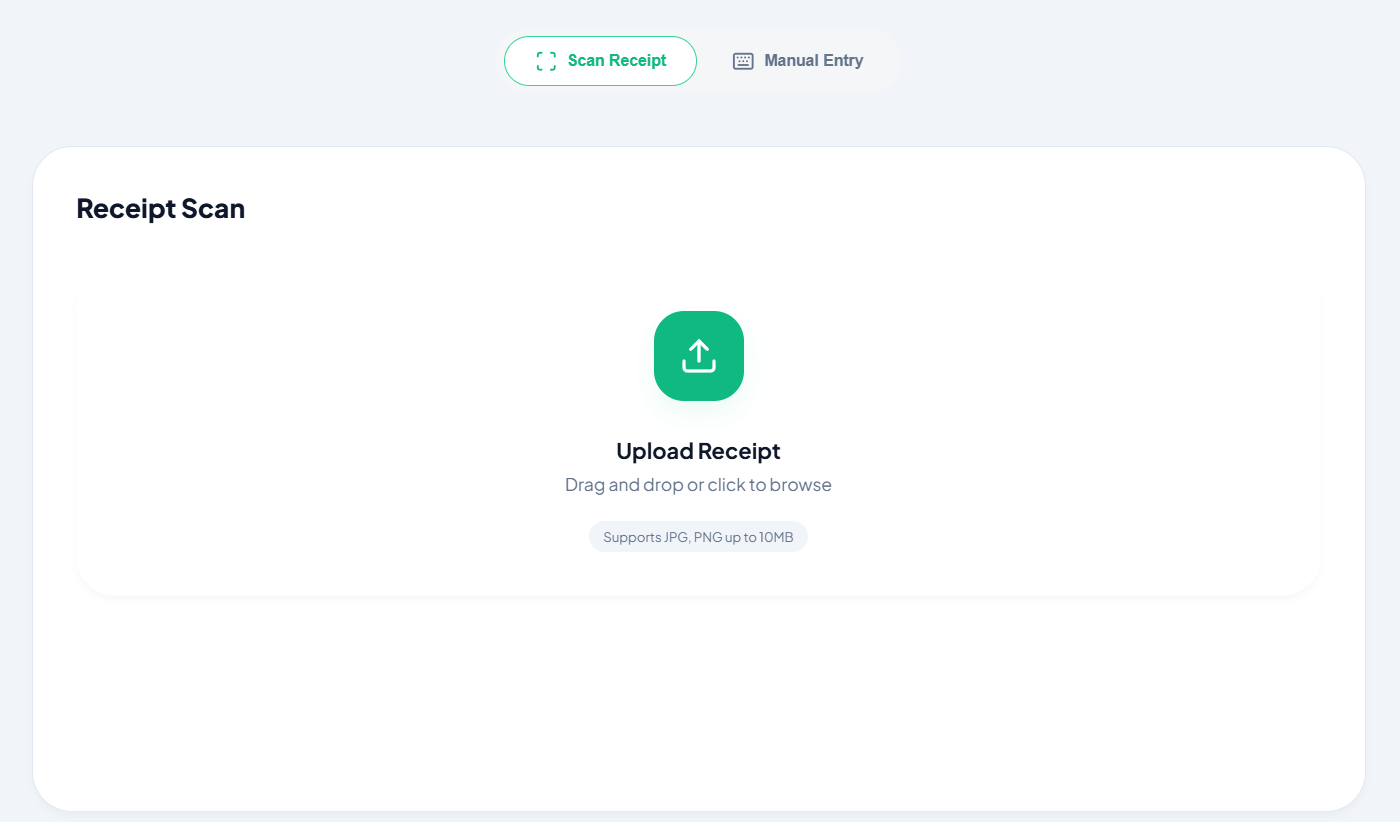
Scan a receipt – AI extracts merchant, date, and line items in seconds
Extracts structured JSON records from receipt images in under 5 seconds using the meta/llama-3.2-11b-vision-instruct model via NVIDIA's NIM API. Automatically populates merchant names, transaction dates, and line-item details.
- ✓✅ Real-time image scanning (< 5 seconds)
- ✓✅ Direct JSON structuring from vision model
- ✓✅ Automatic transactional categorization
💬 AI Chat Assistant
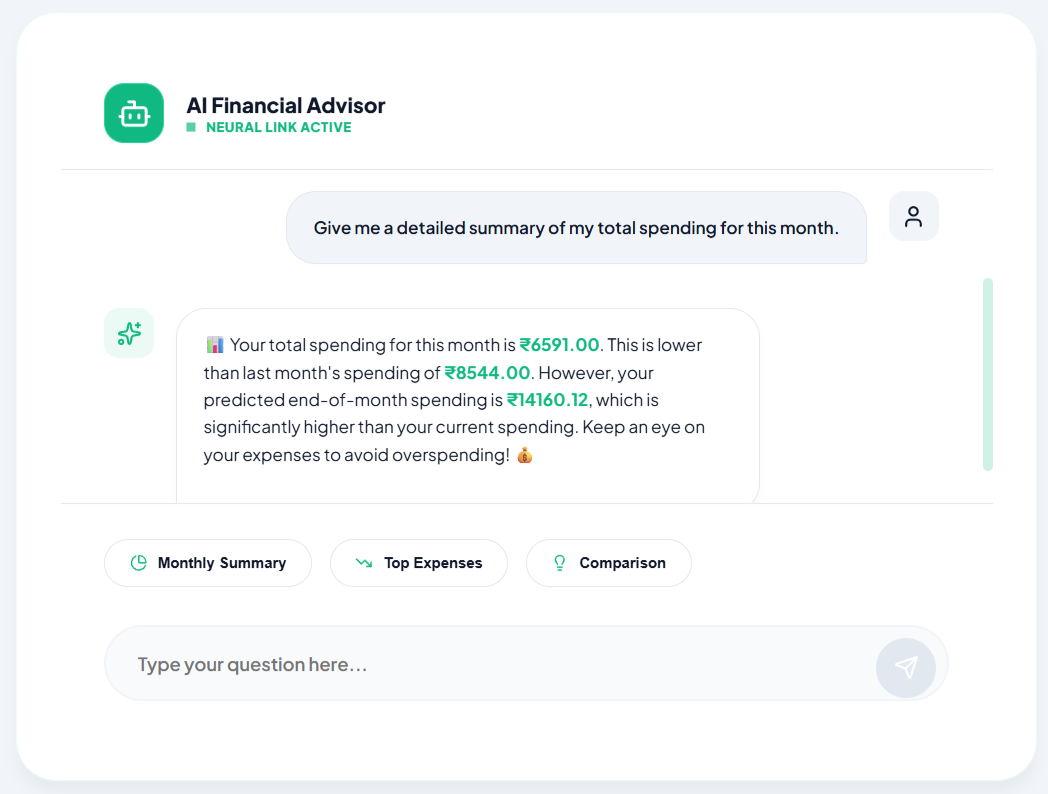
Natural language query – ask about your spending habits and get instant answers
Allows users to query their transaction history using natural language, powered by MongoDB Atlas Vector Search. Users can ask questions like "How much did I spend at Walmart in total?" to get instant, contextual answers.
- ✓✅ Contextual RAG querying
- ✓✅ Pre-filtered user isolation querying
- ✓✅ Natural language insights generation
📊 Analytics Dashboard
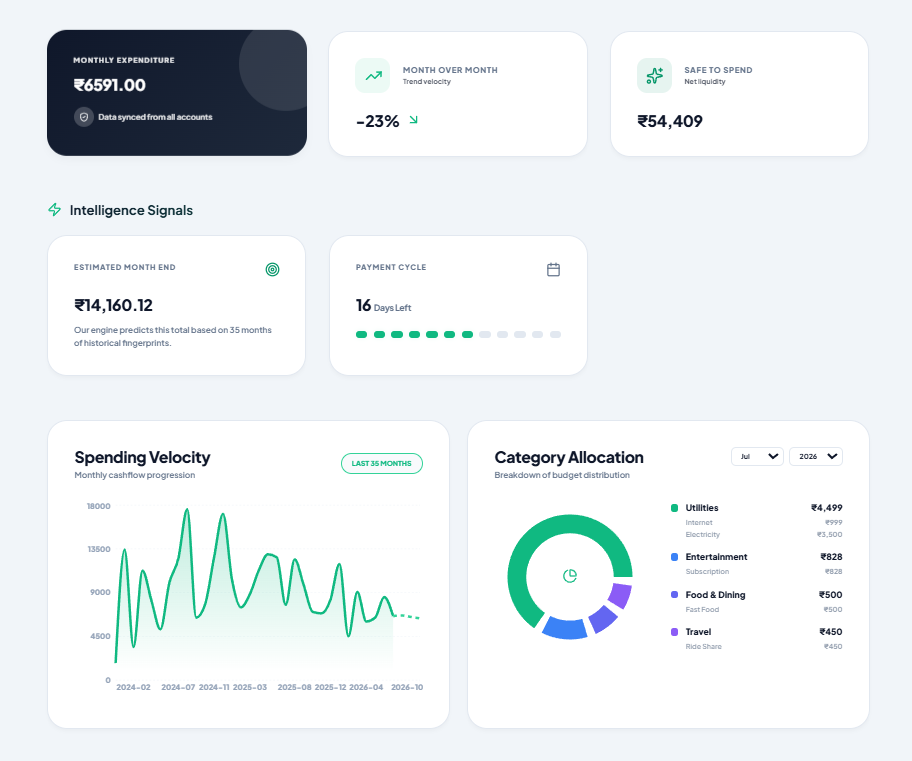
Visual spending trends and 3‑month forecast powered by Holt‑Winters smoothing
Visualizes spending trends, monthly totals, and future projections using Recharts area, line, and pie charts. Predicts monthly spending trends for the next 3 months using the Holt-Winters double exponential smoothing algorithm.
- ✓✅ Interactive trend lines & spent velocity grids
- ✓✅ Outlier flags using standard deviations & IQR fences
- ✓✅ 3-month future spending projections
AI Features & Analytics
FinMind applies machine learning models and statistical forecasting algorithms to generate financial insights.
📈 Double Exponential Smoothing (Holt-Winters)
Predicts spending trends for the next 3 months by smoothing historical monthly totals and extracting level and trend indicators.
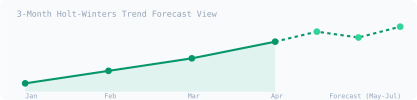
Parameters: Level Factor (α) = 0.40, Trend Factor (β) = 0.30
📉 Ordinary Least Squares (OLS) Regression
Fits a linear trend line on cumulative daily spending data rather than using simple averages. This accounts for early-month spending spikes and base subscription costs to predict month-end totals.
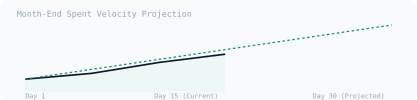
Application: Month-End spent velocity forecasting
📊 Z-Score Outlier Verification (Count ≥ 5)
Measures standard deviations from the category's average value, flagging transaction values exceeding a threshold of 2.0 as anomalies.
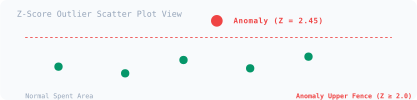
Application: Outlier expense anomaly alerts
📦 Tukey's IQR Outlier Fences (Count < 5)
Standard deviation can be unreliable with limited data. In these cases, the system calculates Interquartile Range (IQR) fences to identify anomalies.
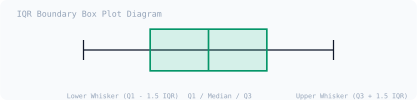
Application: Small-sample size fallback check
Architecture & Repository Map
Architectural flow diagrams detailing the application infrastructure, database schema, and API pipeline.
🧩 Architecture Flow
📁 VS Code Workspace Explorer
☁️ Deployment Stack
Continuous Deployment (CD) pipeline configured via GitHub to trigger automatic NextJS serverless builds on Vercel upon push.
⏱️ Development Lifecycle Timeline
Challenges & Solutions
Engineering solutions implemented to address system limitations and integration challenges.
OCR Accuracy on Receipts
Replaced traditional OCR libraries with the meta/llama-3.2-11b-vision-instruct model via NVIDIA's NIM API to accurately parse receipt structures.
Vercel 4.5MB Payload Limit
Designed a canvas-based client-side image compressor that resizes images larger than 1.5MB down to 1200px before upload, keeping file sizes under 200KB.
Local ISP SRV Blocking
Switched from SRV-based connection strings to standard replica set URIs listing the database shard hostnames directly on port 27017, bypassing local router SRV blocks.
Mongoose Connection Hoisting
Bypassed ES6 import hoisting by using require('mongoose') to ensure that Node's DNS servers are set to Google/Cloudflare in-memory before Mongoose connects to MongoDB.
What I Learned
- ✓• Building and optimizing Next.js serverless REST APIs.
- ✓• Indexing and querying vector databases.
- ✓• Working with NVIDIA NIM APIs.
- ✓• Fine-tuning prompts for JSON structured output.
- ✓• Designing data models and schemas in Mongoose.
- ✓• Applying double exponential smoothing for time-series forecasting.
Future Improvements
- ✓• Voice Logging: Integrating audio transcription models to allow voice-based expense logging.
- ✓• Multi-Currency Support: Adding automated exchange rate conversions.
- ✓• Investment Tracker: Adding portfolio integrations to manage assets.
- ✓• Email Parsing: Connecting email inbox sync APIs to parse digital invoice attachments.
Measurable Project Impact
Key outcomes and metrics from the FinMind project.
✓ Automated Digitization
Eliminates manual expense logging by using Vision OCR to parse receipts in under 5 seconds.
✓ Predictive Insights
Forecasts month-end total spend and future spending trends to help users prevent overspending.
✓ Semantic Search Retrieval
Allows users to search their transaction history using natural language queries.
Case Study Key Takeaways
- ✓✅ Engineered full-stack Next.js production architecture
- ✓✅ Integrated AI OCR Llama-3.2-Vision receipt parsing
- ✓✅ Configured isolated MongoDB Atlas Vector Search pipelines
- ✓✅ Designed and optimized REST API structures & Mongoose schemas
- ✓✅ Applied Holt-Winters & OLS predictive analytics algorithms
Lighthouse Metrics
FinMind Case Study • Built by Derin Girish D G
Powered by Next.js, MongoDB Atlas, and NVIDIA NIM